If you are setting up a digital loyalty card for the first time, the first real decision is not which platform to use, it is which technology your customers will actually tap or scan. NFC and QR codes both replace the paper stamp card, but they work differently, and each suits certain businesses better than others.
Neither is wrong. NFC edges ahead for speed and reliability at a till or counter, QR wins for individual tables and zero-hardware setups. Most businesses end up using both.
How NFC tap-to-stamp works
NFC, or Near Field Communication, is the same short-range wireless technology behind contactless card payments. A small NFC tag sits inside a stand or sticker on your counter or table. When a customer holds their phone near it, the phone reads the tag and opens the loyalty card automatically, no app, no camera, no typing. Almost every phone sold in the UK since around 2018 has NFC built in and switched on by default.
How QR code scanning works
A QR code is a printed pattern that encodes a web link. The customer opens their phone camera, points it at the code, and taps the link that pops up. It needs no special hardware beyond a printed sticker, and works on effectively any smartphone from the last decade.
Speed and convenience compared
NFC is faster in practice, a tap takes under a second once the phone is near the tag, with no need to open the camera app first. QR requires the customer to unlock their phone, open the camera, aim it steadily, and wait for the link prompt, which usually takes three to five seconds. Neither is slow, but NFC feels more like a contactless payment and less like a chore.
Reliability in the real world
QR codes can struggle in low light, on a glossy or damaged sticker, or when a phone camera is dirty. NFC has no lighting requirement and works through a thin phone case, though a very thick case or a metal ring holder can occasionally interfere with the signal. In practice, most businesses find NFC slightly more reliable at a busy till, while QR is a useful fallback when a phone genuinely cannot read NFC.
Cost and setup compared
QR codes cost almost nothing, a printed sticker is enough to get started the same day. NFC requires a small one-off hardware purchase, typically a stand or sticker with an embedded chip, but needs no app or software setup beyond that. Over time the running cost is identical, since both simply trigger the same digital loyalty card behind the scenes.
Which should your business choose?
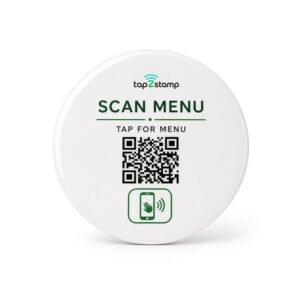
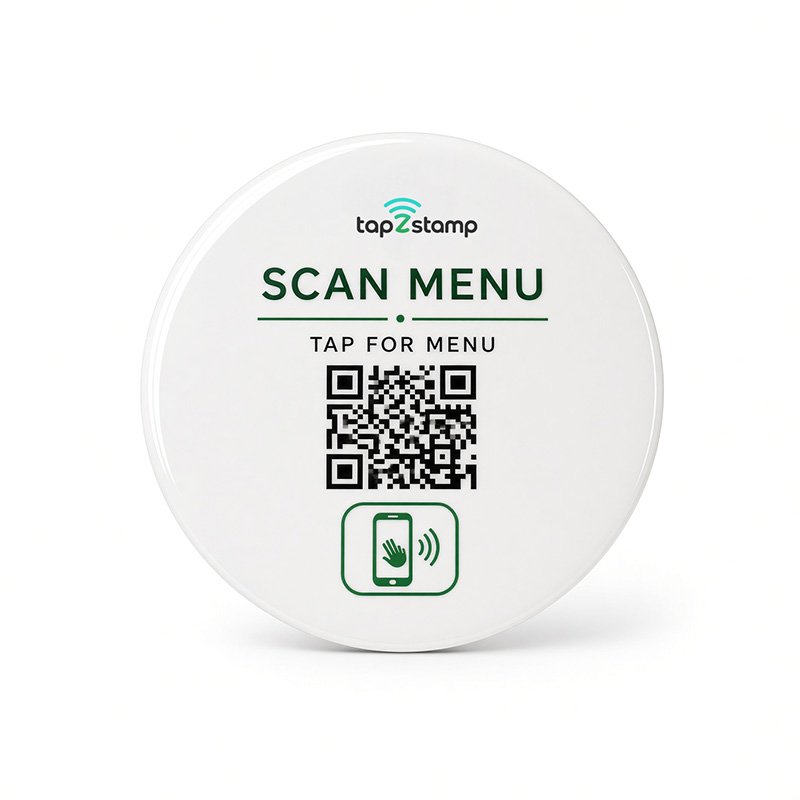
For a till-side setup where staff can point a customer toward a stand, NFC tends to give the smoothest experience. For individual restaurant tables, a QR sticker is often more practical since customers scan independently from their seat without needing to walk anywhere. Many businesses use both: an NFC stand at the counter and QR stickers on tables or in a shop window.
Why TaDa Tap supports both
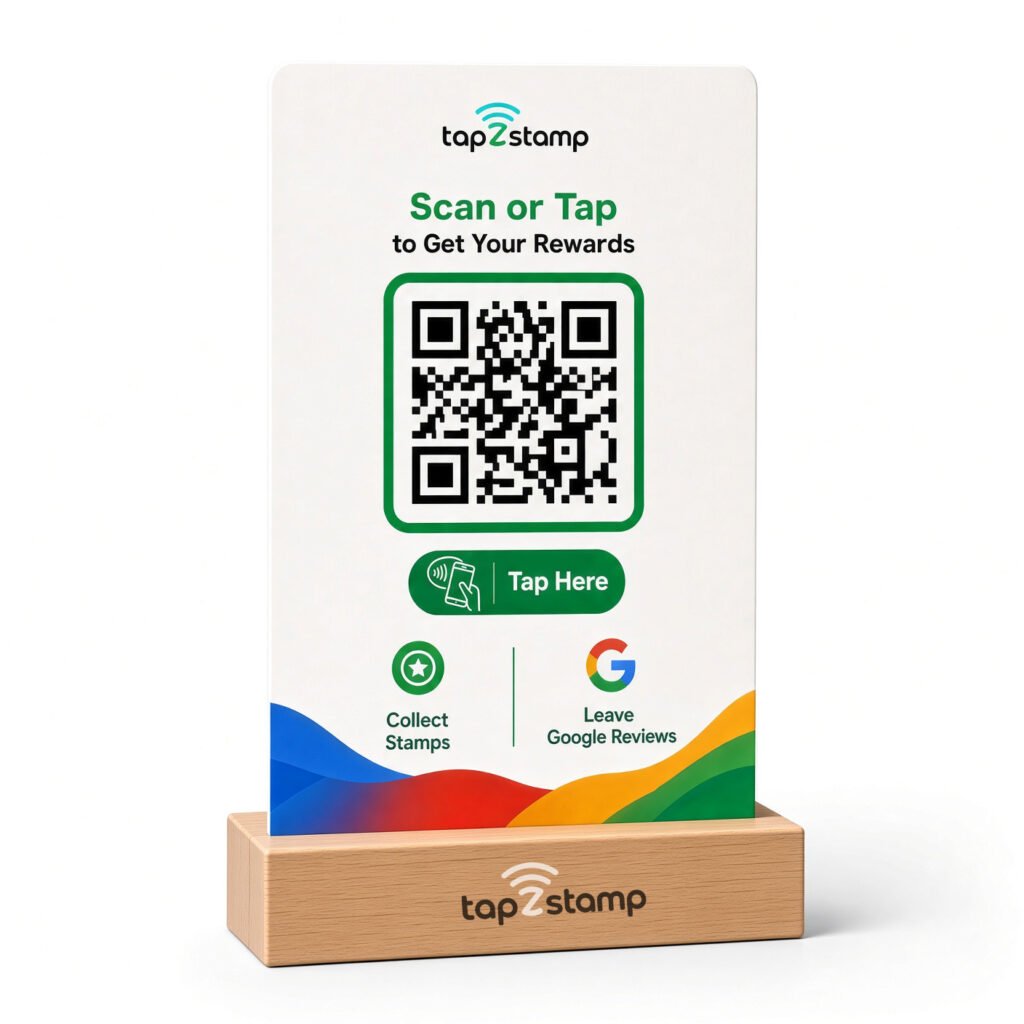
Rather than forcing a single choice, TaDa Tap gives every customer both options from the same loyalty card. Our All-in-One Multi Link Stand combines NFC and QR in one unit for counters and till points, and dedicated QR table stickers are available separately for restaurant and cafe tables. See the full lineup and pricing on our pricing page.