Repeat customers are the backbone of almost every small business. A loyal regular does not just spend more over time, they refer friends, leave reviews, and give you predictable revenue in quiet weeks. Yet most UK small businesses still have no formal way of recognising that loyalty beyond a paper card that gets lost within a fortnight.
If you are thinking about launching a loyalty programme for the first time, here is a practical walkthrough of how to do it properly.
Why customer loyalty matters more than ever
UK consumers have more choice on the high street and online than ever, and switching costs are close to zero. There is always another cafe, another barber, another takeaway two doors down. A loyalty programme gives customers a small, tangible reason to keep choosing you specifically, rather than whichever option is most convenient that day.
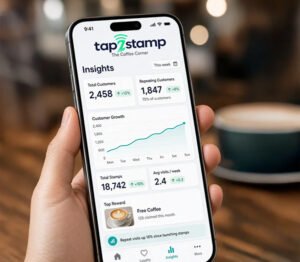
It also gives you something paper cannot: data. Once you know who your regulars are and how often they visit, you can make better decisions about opening hours, staffing, and promotions.
Step 1: Decide what you are actually rewarding
Before picking any technology, get clear on the behaviour you want to encourage. Most businesses default to a stamp per visit, but that is not always right. A cafe might reward a stamp per drink. A salon might reward total spend rather than visit count, since a colour appointment and a fringe trim are not worth the same to your business. A retailer might reward a stamp per transaction over a minimum spend, to avoid rewarding a single bag of crisps the same as a full shop.
Step 2: Choose your loyalty card format
You have three realistic options in 2026:
- Paper stamp cards are free to start but get lost, damaged, or forgotten constantly, and give you zero customer data.
- A dedicated app gives you full control but asks customers to download something before they have even decided if they like you yet, which is a real barrier to signup.
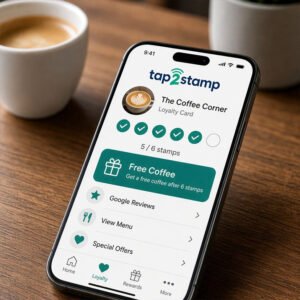
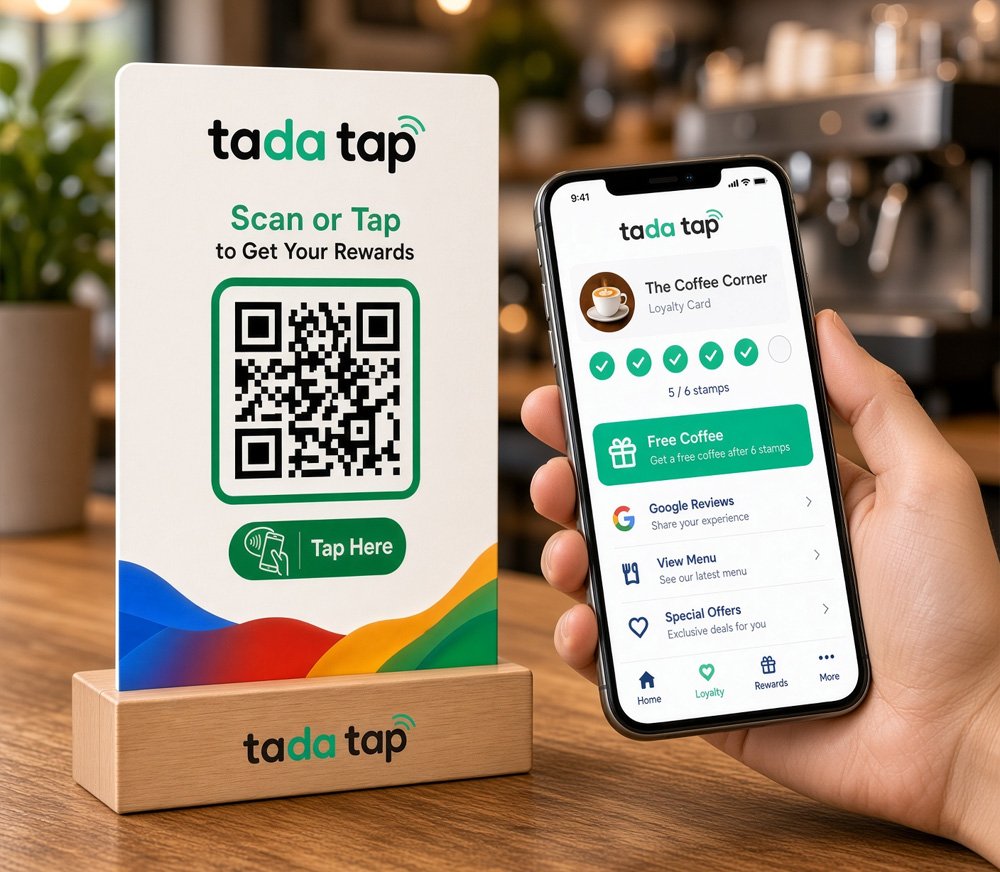
- A digital loyalty card via NFC tap or QR scan gives you the data and reliability of an app without making customers install anything. This is the model most UK loyalty platforms, including TaDa Tap, are built around.
Step 3: Set your reward threshold
Set the bar too high and customers stop believing they will ever reach it. Set it too low and you are giving away margin for very little loyalty in return. As a rough starting point, UK cafes typically reward a free drink after 9 or 10 stamps, barbers after 10 cuts, and restaurants after 8 visits. See our full breakdown in how many stamps a loyalty card should have.
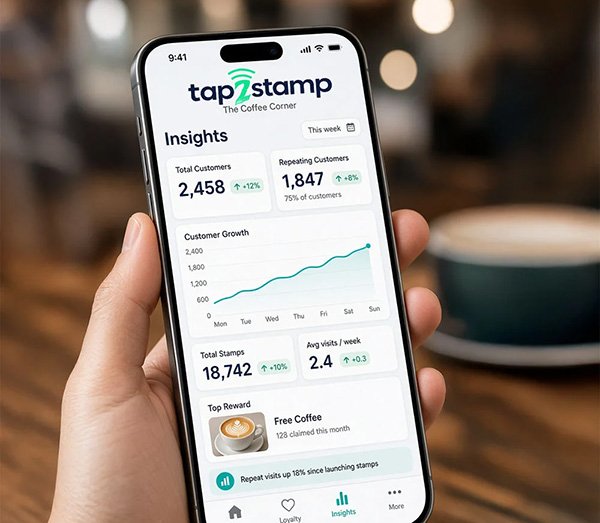
Step 4: Choose your technology
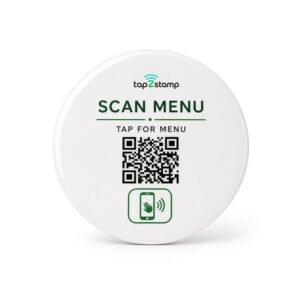
NFC tap and QR code scanning both work well for collecting stamps without an app download. NFC is marginally faster and feels more premium at the till; QR works from any camera phone and costs nothing extra to print. Many businesses, TaDa Tap included, support both so you are not locked into one at signup. We cover the tradeoffs in detail in NFC vs QR code loyalty cards.
Step 5: Launch it properly
A loyalty programme only works if customers know it exists. Put a sign at the till, brief your staff to mention it at checkout for the first few weeks, and tell your existing regulars directly rather than waiting for them to notice. The first two weeks of visible staff promotion matter more than any amount of passive signage.
Common mistakes to avoid
The most common failure mode is not a broken card, it is going live without a real target for what reward, at what threshold, for what behaviour. Also avoid over-complicating your first version: a single reward, clearly explained, beats an intricate multi-tier scheme that staff cannot describe to a customer in one sentence.
Getting started
If you want to see exactly how this works in practice, our How It Works page walks through the customer and business side, and pricing covers what it costs to get set up, including the first year of the Starter plan free when you buy your hardware.